

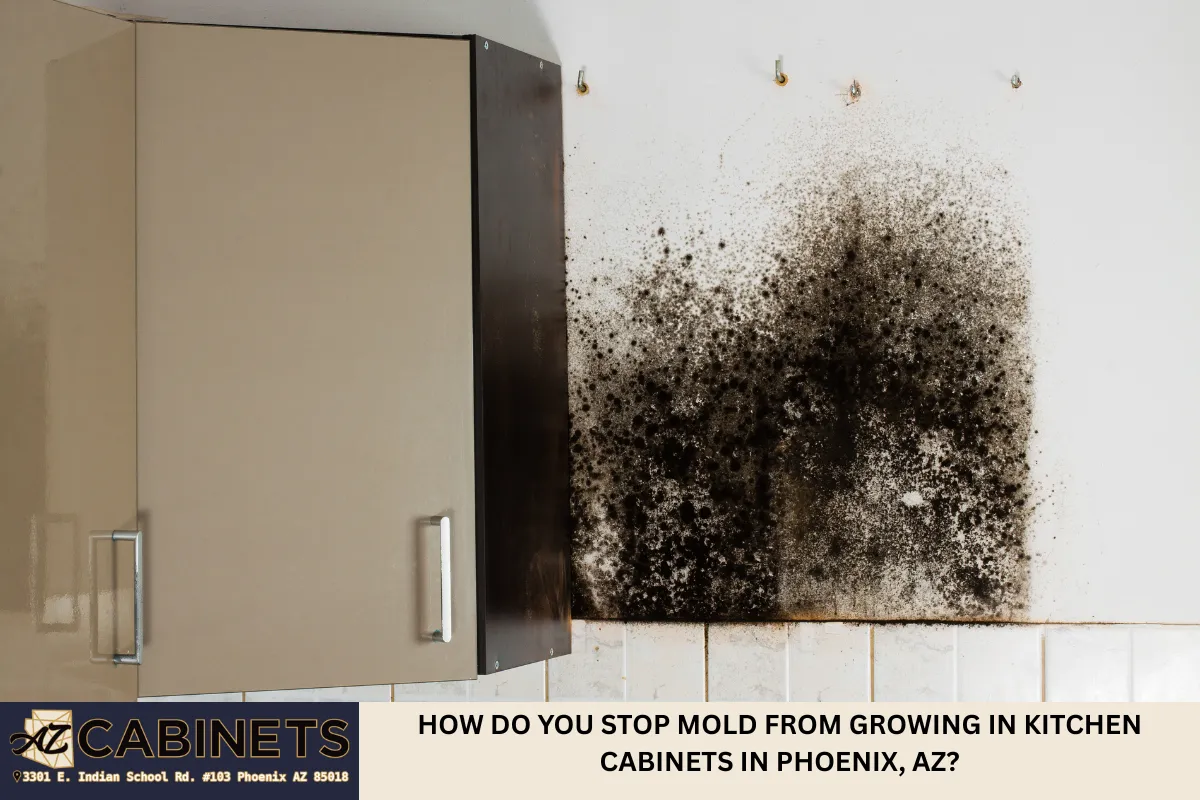
Kitchen Cabinets in Phoenix, AZ face a problem many homeowners don’t notice until it becomes serious: mold growth hidden behind doors, shelves, and stored items. The desert climate may feel dry, but kitchens trap moisture from cooking, dishwashers, and plumbing, creating the perfect environment for mold to thrive inside cabinetry. Left unchecked, mold can damage kitchen cabinets, create unpleasant odors, and even affect indoor air quality. That’s where prevention matters. The good news is that mold growth in kitchen cabinet spaces is preventable with the right habits, materials, and maintenance strategies. By controlling moisture, improving airflow, choosing the right finishes, and caring for your kitchen cabinetry properly, you can keep your cabinets clean, durable, and safe for years to come.
Why Mold Shows Up Inside Kitchen Cabinet Spaces in Phoenix Homes
Mold needs three things to grow: moisture, warmth, and organic material. Phoenix kitchens provide all three, even in a desert environment.
How Desert Heat Contributes to Hidden Moisture
While Phoenix is known for low humidity, indoor kitchens tell a different story. Daily cooking releases steam, dishwashers produce heat and condensation, and sinks introduce constant moisture. When warm air meets cooler cabinet interiors, condensation can form, especially inside lower kitchen cabinets and corner units.
Common Moisture Sources Around Kitchen Cabinets
Mold often starts in areas homeowners rarely check. Common causes include:
- Small plumbing leaks under sinks
- Condensation from cold water lines
- Steam from ovens and stovetops
- Spills that seep into cabinet seams
- Poor ventilation near exterior walls
Once moisture is trapped inside a kitchen cabinet, mold spores can settle and multiply quickly.
Why Kitchen Cabinet Materials Matter
Not all kitchen cabinetry responds the same way to moisture. Particleboard and MDF absorb water easily, swelling and breaking down over time. Solid wood cabinets are more durable but still vulnerable if not sealed properly. The cabinet finish, construction quality, and interior coatings all influence mold resistance.
Early Warning Signs Mold May Be Developing in Your Cabinets
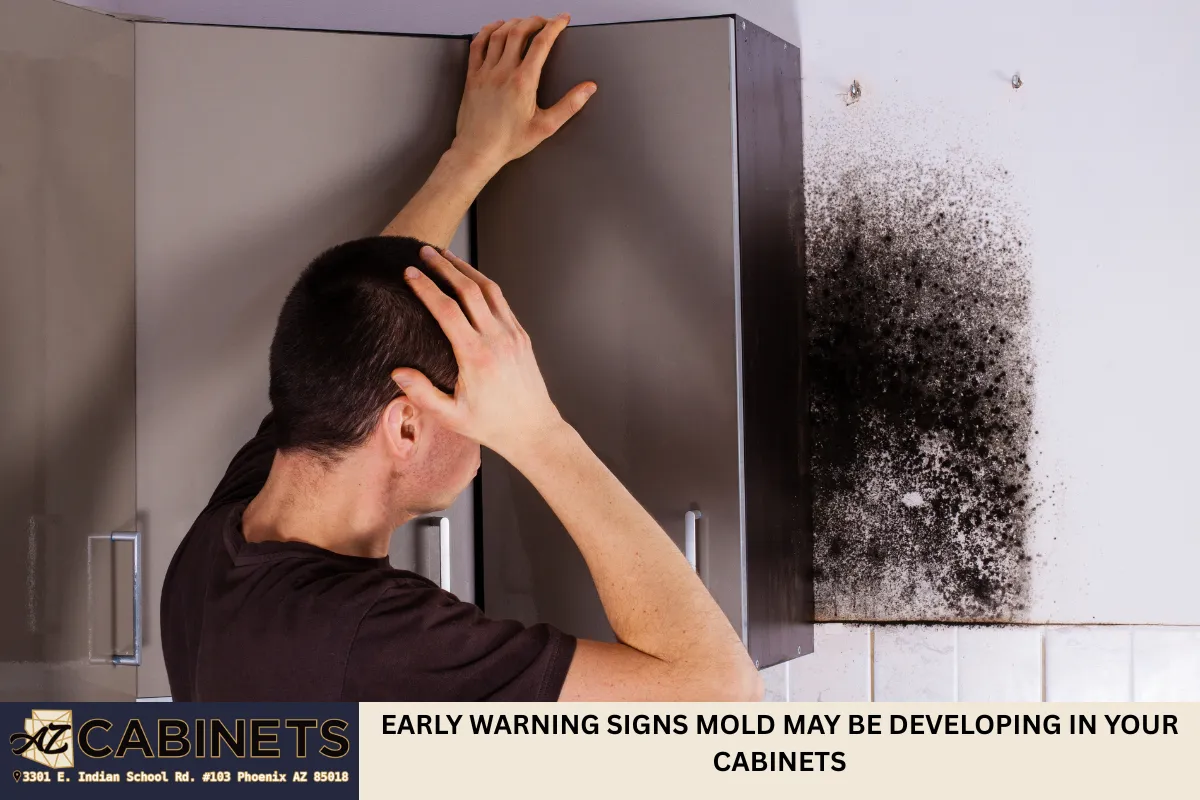
Catching mold early can save your kitchen cabinets from costly damage.
Visual Clues to Watch For
Look for:
- Dark spots or discoloration on cabinet interiors
- Fuzzy or powdery residue on shelves
- Warping or bubbling of cabinet surfaces
- Peeling interior finishes
These signs often appear at the back corners or along cabinet bottoms.
Odors That Signal a Hidden Problem
A musty or earthy smell when opening cabinet doors often means mold is present, even if you can’t see it yet. Odors tend to linger near sink cabinets, pantry cabinets, and enclosed storage areas.
Health-Related Red Flags
While this article focuses on cabinets, it’s important to note that mold can contribute to respiratory irritation and allergies. If kitchen odors persist or worsen, it’s time to inspect your cabinetry closely.
Smart Moisture Control Strategies for Kitchen Cabinet Protection
The most effective way to stop mold growth is to manage moisture before it becomes a problem.
Fix Small Plumbing Issues Immediately
Even slow drips under sinks can create ideal mold conditions. Regularly check:
- P-traps and supply lines
- Garbage disposal connections
- Dishwasher hoses
Dry the cabinet interior completely after any leak repair.
Improve Air Circulation Inside Cabinets
Stagnant air encourages mold growth. Improve airflow by:
- Avoiding overpacked shelves
- Leaving cabinet doors open periodically
- Using vented shelving inserts where possible
Good airflow helps moisture evaporate faster.
Use Dehumidification in Strategic Areas
While whole-house humidity may be low, kitchens can benefit from localized moisture control. Running exhaust fans during cooking and using dehumidifiers in nearby spaces helps protect kitchen cabinets.
Cleaning Techniques That Prevent Mold Without Damaging Cabinetry
Regular cleaning is essential, but harsh products can damage cabinet finishes.
Safe Cleaning Methods for Cabinet Interiors
Use gentle solutions such as:
- Mild dish soap and warm water
- Vinegar diluted with water for spot cleaning
- Baking soda paste for odors
Always dry surfaces thoroughly after cleaning.
What to Avoid When Cleaning Kitchen Cabinets
Avoid soaking cabinet interiors or using abrasive scrubbers. Excess water can seep into joints and seams, increasing the risk of mold.
Establishing a Preventive Cleaning Routine
Wipe down cabinet interiors every few months, especially near sinks and cooking zones. Seasonal checks help catch moisture issues early.
Read What’s the Best Way to Maintain Painted Kitchen Cabinets in Phoenix, AZ?
How Cabinet Design and Finishes Help Resist Mold Growth
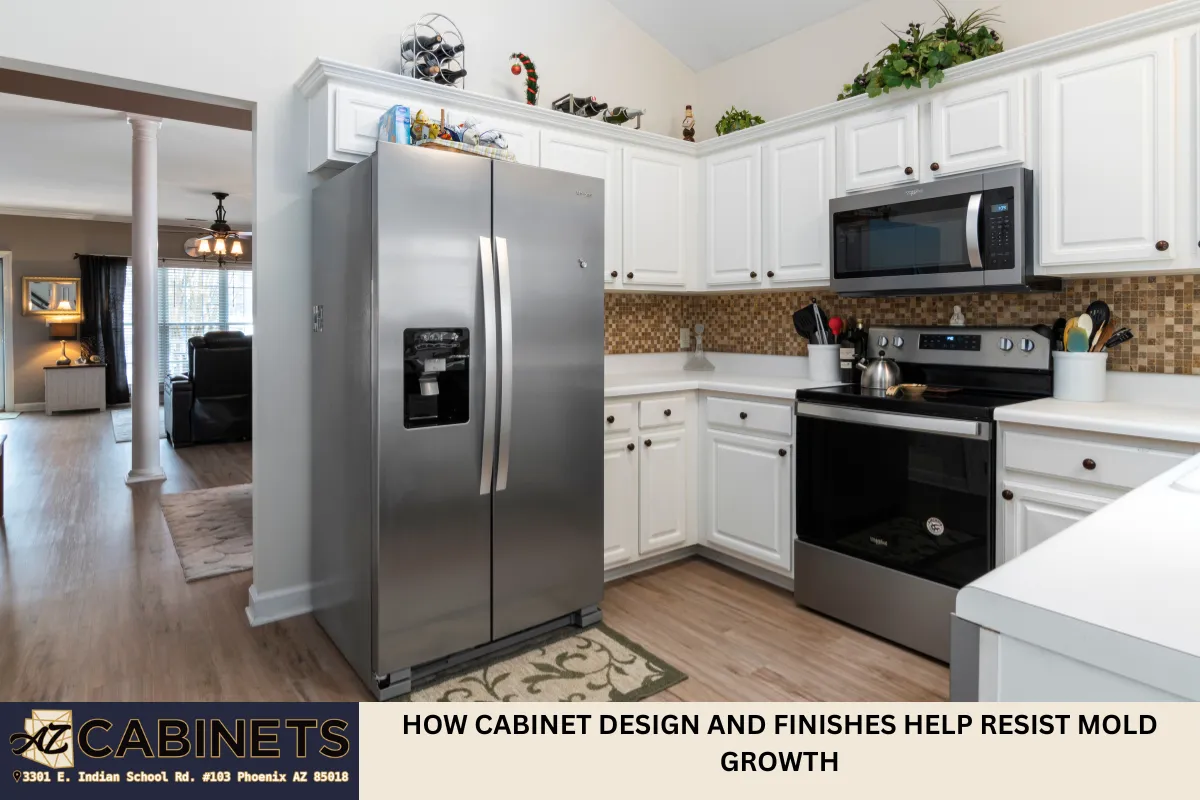
Thoughtful cabinet choices play a major role in mold prevention.
Moisture-Resistant Finishes and Coatings
High-quality finishes seal cabinet surfaces, preventing water absorption. Look for sealed interiors and protective coatings that resist humidity.
The Role of Cabinet Construction Quality
Well-built cabinets feature tight joints, solid back panels, and proper sealing. These details reduce gaps where moisture can collect.
Why Cabinet Showroom Selection Matters
Visiting a cabinet showroom allows homeowners to compare materials, finishes, and construction methods firsthand. Seeing cabinet interiors and asking about moisture resistance can make a significant difference in long-term performance.
Storage Habits That Reduce Mold Risk Inside Kitchen Cabinets
How you use your kitchen cabinets matters just as much as how they’re built.
Keep Stored Items Completely Dry
Never store damp sponges, towels, or containers inside cabinets. Allow items to dry fully before putting them away.
Avoid Plastic Traps Inside Cabinets
Plastic bins without ventilation can trap moisture. Opt for breathable organizers that allow air circulation.
Rotate Stored Goods Regularly
Pantry cabinets benefit from rotation. This prevents forgotten spills or expired items from creating hidden moisture sources.
Seasonal Maintenance Tips for Phoenix Kitchens
Even in Phoenix, seasonal changes affect indoor moisture.
Summer Cooking and Humidity Awareness
Monsoon season can raise indoor humidity. Use exhaust fans consistently and monitor cabinet interiors during warmer months.
Winter Plumbing Checks
Cooler temperatures can cause condensation on pipes. Insulate exposed plumbing under sinks to reduce moisture buildup.
Annual Cabinet Inspections
Once a year, empty key cabinets and inspect for leaks, odors, or surface changes. Early detection keeps small issues from becoming major repairs.
When Mold Is Already Present: Practical Next Steps
If you discover mold inside your kitchen cabinet, acting quickly is critical.
Minor Surface Mold Solutions
Small areas can often be cleaned with appropriate solutions and thorough drying. Remove affected items and increase airflow immediately.
When Professional Help Is Necessary
Widespread mold, soft cabinet materials, or recurring growth may indicate deeper moisture issues. In such cases, professional evaluation is recommended to prevent further damage.
Preventing Recurrence After Cleanup
Address the root cause, whether it’s leaks, ventilation, or cabinet materials. Without fixing the source, mold will likely return.
Kitchen Cabinets in Phoenix, AZ – C4L Cabinetry – AZ Cabinets

We understand how frustrating mold issues can be for homeowners who want beautiful, long-lasting kitchen cabinets. At C4L Cabinetry – AZ Cabinets in Phoenix, Arizona, we focus on helping you choose kitchen cabinetry designed to stand up to real kitchen conditions. Our cabinet store offers quality cabinet options, moisture-resistant finishes, and thoughtful designs that support healthier kitchens. While we don’t perform cabinet installation, we proudly refer our customers to reputable local contractors they can trust. If you’re planning a kitchen upgrade or replacing damaged cabinetry, we’re here to guide you every step of the way. Visit our cabinet showroom, call us at (602) 314-6238, or fill out our contact form to explore solutions that protect your kitchen cabinets for the long term.
Frequently Asked Questions
Can mold grow inside brand-new kitchen cabinets?
Yes, mold can grow even in new kitchen cabinets if moisture is present. New cabinetry may still be exposed to humidity from construction, plumbing connections, or cooking steam. If cabinet interiors aren’t fully sealed or dried properly, mold spores can settle quickly. This is why proper ventilation, moisture control, and regular inspections are important even after a kitchen renovation. Preventive care from the start helps protect your investment.
Are certain kitchen layouts more prone to cabinet mold?
Kitchens with limited ventilation, enclosed layouts, or cabinets installed against exterior walls may experience higher moisture retention. Corner cabinets and sink base cabinets are especially vulnerable due to poor airflow and plumbing access. Improving ventilation and choosing well-constructed cabinetry can significantly reduce mold risk in these layouts.
Does repainting cabinet interiors help prevent mold?
Repainting cabinet interiors with moisture-resistant coatings can help, but it’s not a standalone solution. Paint can seal surfaces temporarily, but underlying moisture issues must be resolved first. Without fixing leaks or humidity problems, mold may return beneath the new coating. Proper preparation and moisture control are essential for lasting results.
How often should kitchen cabinets be checked for mold?
A thorough inspection once or twice a year is ideal, with additional checks after plumbing repairs or during high-humidity periods. Cabinets under sinks, near dishwashers, and in pantry areas should be monitored more closely. Regular inspections help catch early signs before mold spreads or damages cabinetry.
Can cabinet materials affect indoor air quality?
Yes, damaged kitchen cabinetry affected by mold can contribute to unpleasant odors and reduced indoor air quality. Mold spores may circulate when cabinet doors are opened. Choosing quality cabinet materials, maintaining dryness, and addressing issues promptly helps support a healthier kitchen environment.
Disclaimer: This article is for general informational purposes only and does not replace professional inspection or remediation advice. Always consult qualified professionals for mold-related concerns or structural cabinet issues.
Read Buy Cabinets in Phoenix, AZ: Which Cabinet Finish Lasts The Longest?




Leave A Comment